


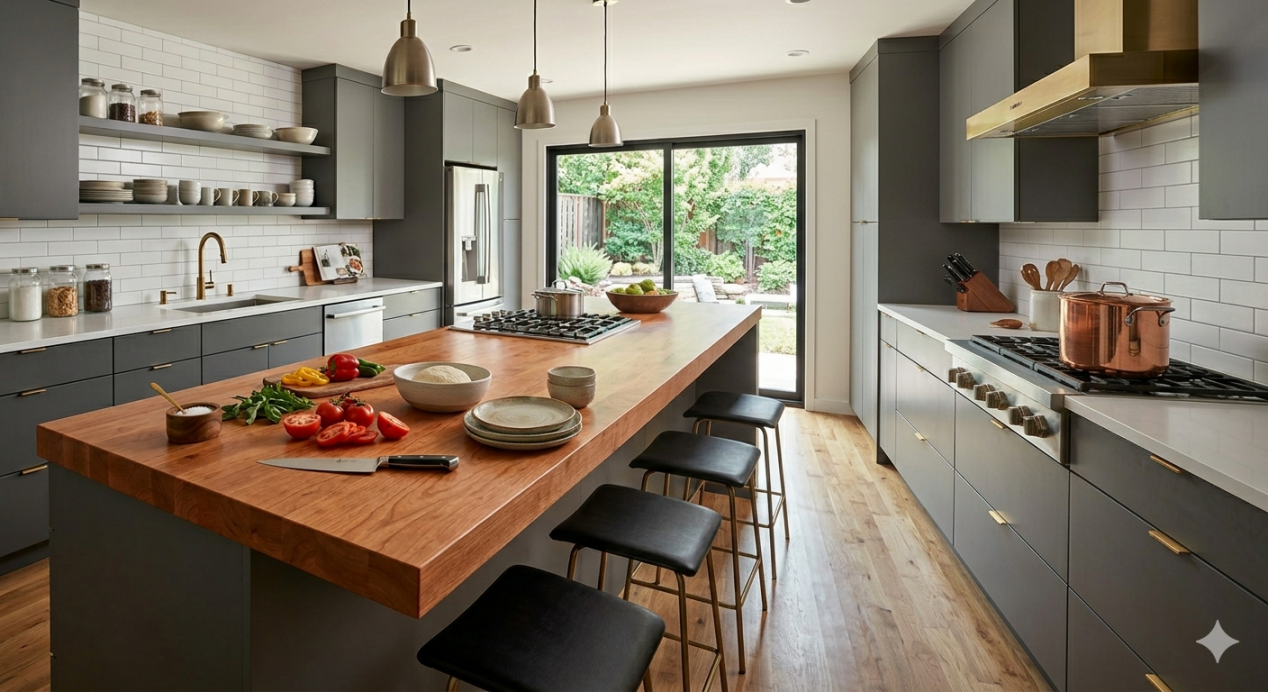
The resurgence of natural materials in modern interior design has brought wood back to the forefront of luxury home finishes. While once reserved for rustic cabins or traditional butcher blocks, wood surfaces are now being integrated into high-end aesthetics across the entire home. By understanding the diverse species available and the modern sealing techniques that protect them, homeowners can confidently install these warm, organic surfaces in both high-traffic kitchens and moisture-rich bathrooms. The transition of wood from a purely functional prep surface to a sophisticated design element marks a shift toward homes that feel more grounded and connected to the natural world.
Selecting the Ideal Species for Culinary Spaces
Kitchen countertop success relies on wood density and grain. Hardwoods provide the essential durability for daily food prep. American Cherry is a popular choice for its warm glow, maturing from a light tone into a deep reddish-brown, making it perfect for elegant islands or dining surfaces.
For maximum resilience, Hard Maple and Black Walnut are premier options. Hard Maple’s extreme density and tight grain make it the industry standard for functional butcher blocks, while its light color keeps the space looking clean and bright. Black Walnut offers a sophisticated, dark palette with swirling grains, balancing structural strength with high-end aesthetics.
Exploring Exotic and Traditional Tones
Beyond common domestic hardwoods, numerous options cater to specific design visions. White and Red Oak provide a classic, textured look with prominent grain patterns that feel both sturdy and timeless. Oak is particularly prized for its ability to take stains well, allowing homeowners to customize the hue to match flooring or cabinetry perfectly.
For a more exotic aesthetic, species like Teak or Iroko are frequently utilized. These woods are naturally high in oils and resins, providing inherent protection against kitchen spills. Teak, famously used in ship construction, is nearly impervious to water damage, making it a prestigious choice for luxury designs. Similarly, Wenge offers a nearly black, linear grain that fits perfectly into ultra-modern, minimalist kitchens requiring a bold architectural statement.
Breaking the Myth of Wood in the Bathroom
A common remodeling misconception is that wood cannot handle bathroom humidity. In reality, wood is an excellent choice for vanities or shelving when finished correctly. While bathrooms present challenges like steam and water exposure, treating the wood properly prevent moisture from penetrating the fibers, eliminating risks of warping or rot.
This makes wood a practical and beautiful option for everything from powder rooms to high-traffic master suites.
Creating a Spa-Like Sanctuary with Natural Textures
Bathrooms often feel clinical due to “cold” materials like tile, glass, and stone. Introducing a wood countertop acts as a visual anchor that softens the environment and creates a sense of tranquility. The organic variation in wood grain provides a beautiful contrast to flat porcelain, instantly turning a standard bathroom into a spa-like retreat.
Wood’s tactile nature and psychological warmth also enhance the sensory experience, making daily routines feel more peaceful. Whether it is deep Walnut for a bold ensuite or light Ash for an airy guest bath, wood adds a layer of sophisticated comfort that synthetic materials cannot replicate. It effectively invites the outdoors in, creating a private, artisanal sanctuary.
Maintenance and Longevity Across Different Environments
The longevity of a wood surface depends heavily on its finish, which varies by room function. Kitchen surfaces used for food preparation we recommend The Original Wood Wax™ and The Original Wood Oil™. These finishes penetrate the fibers and require periodic treating every few months to prevent drying and maintain water resistance. This simple maintenance allows the wood to develop a beautiful, lived-in patina over decades of use.
Designing with Mixed Materials and Custom Edges
Wood’s greatest strength is its ability to complement other materials. In a kitchen, pairing a large wood island with soapstone or quartz perimeter counters creates a curated, balanced look that avoids a clinical feel. This provides a “landing zone” that remains warm to the touch for guests.
In the bathroom, a wood vanity serves as a stunning base for stone, copper, or glass vessel sinks. Its flexibility allows for diverse customization, from sleek modern edges to thick, rustic live-edge slabs. Wood can be easily tailored to fit awkward corners or extended into integrated shelving. By embracing this material, you bring a durable and beautiful piece of the natural world into your daily living environment.
Recent Comments